
WHOLEHER WELLNESS TRIBUNE Issue 5 | Week of June 1, 2026
Nobody told you it would feel like this.
Not the hot flash in the middle of a presentation.
Not the word that disappears mid-sentence while you are talking to someone who is waiting for you to finish.
Not the 3am wake-up where you are suddenly wide awake, completely wired, composing a mental list of everything you have not done since 2017.
Nobody sat you down and said: at some point your body is going to shift in ways that feel like betrayal. And the medical system is going to call it perimenopause and hand you a pamphlet.
Here is what the pamphlet does not say.
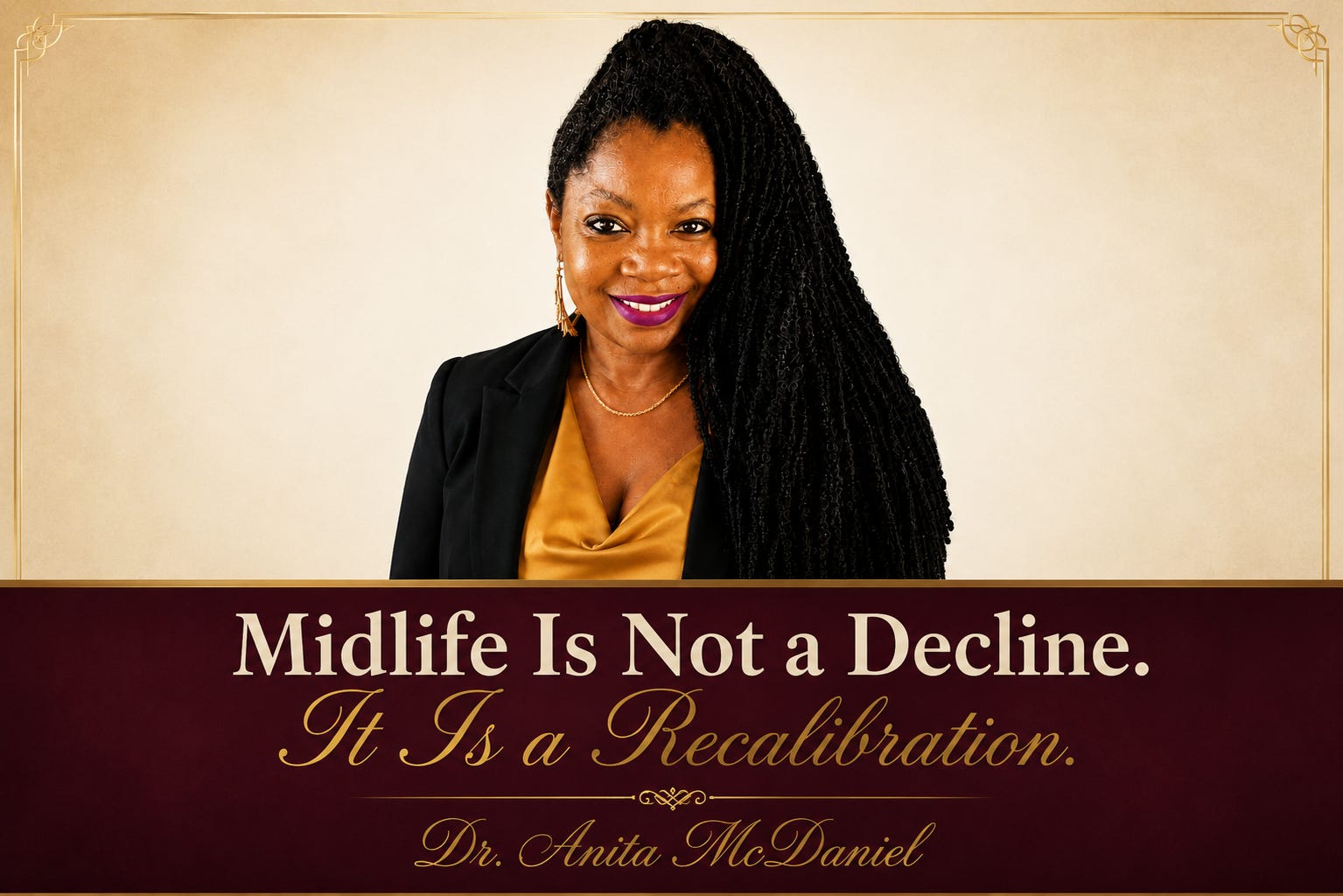
What you are experiencing is not a breakdown. It is a recalibration. And there is a meaningful difference between those two things.
What is actually happening
Perimenopause is not a single event. It is a transition that can begin as early as your late thirties and extend well into your fifties. During this time estrogen levels do not simply drop. They fluctuate. Sometimes dramatically. Sometimes unpredictably.
And estrogen does far more than most people realize.
It is not just a reproductive hormone. Estrogen regulates your cortisol response. It influences your sleep architecture. It affects how your brain processes information, manages mood, and sustains focus. It plays a direct role in metabolic function and inflammatory response.
When estrogen fluctuates, all of those systems feel it.
This is not your body failing you. This is your body communicating a transition that deserves a real response.
What your nervous system is experiencing
Here is the part that connects everything.
Estrogen has a buffering effect on the stress response. When estrogen is stable, it helps regulate how your nervous system reacts to threat. When estrogen fluctuates, that buffer becomes unpredictable.
The result is a nervous system that is more reactive than it used to be. More sensitive to stress. Less able to return to baseline quickly after a difficult moment.
That is why the small things feel bigger than they should right now.
That is why your emotional regulation feels thinner than it used to.
That is why a conversation that would not have bothered you two years ago can send your whole system into a response it takes hours to recover from.
You are not becoming less resilient.
Your regulatory infrastructure has shifted and has not yet been rebuilt.
That is a recalibration problem. Not a character problem.
The five systems under pressure
When estrogen fluctuates in perimenopause, five systems feel it simultaneously.
The nervous system becomes more reactive and less able to self-regulate without support.
The metabolic system slows its efficiency and begins storing differently than it did before. Weight trending in directions that do not respond to what worked in your thirties is not a willpower failure. It is a metabolic recalibration.
The cognitive system loses some of its sharpness. The word retrieval slows. The focus that used to be effortless requires more effort. The brain fog is real and it has a physiological explanation.
The emotional system becomes less buffered. Reactivity increases. Flatness alternates with overwhelm. The capacity to regulate comes back more slowly after stress.
The sleep system shifts. The architecture of your sleep changes. Deep restorative sleep becomes harder to access. The 3am cortisol spike becomes a regular visitor.
None of this is random.
All of it is connected.
And all of it responds to the same thing: regulation first.
Why regulation is the first response
Most of the interventions offered to women in perimenopause address the symptoms.
Hot flashes. Sleep disruption. Mood changes. Weight trending.
What regulation addresses is the underlying system that is producing all of those symptoms simultaneously.
When the nervous system is regulated and the hormonal environment is supported rather than fought, the symptoms do not disappear overnight. But the body begins to find its footing again. Sleep improves. Reactivity settles. Metabolism stabilizes. Cognitive clarity returns.
Not because you tried harder.
Because the foundation finally had what it needed.
What this means for you
If you are in perimenopause and your system feels unstable right now, I want you to hear this.
You are not declining. You are recalibrating.
The difference matters because decline asks you to manage. Recalibration asks you to restore.
And restoration starts with understanding what your specific system is communicating right now.
The free assessment at themcdanielinstitute.com will show you which signals are most active in your system. It takes ten minutes. And it will give you language for what you have been experiencing that nobody else has given you yet.
Your hormones are not the problem.
They are the signal.
Dr. Anita McDaniel, Ph.D. | Doctor of Holistic & Functional Medicine | Functional Integrative Restoration Strategist | Brain, Metabolic & Emotional Health